
Ailing telecom operator Vodafone Idea has flagged the industry's "unsustainable financial duress" in its latest annual report and hoped that the government would provide the necessary support to address "all structural issues" faced by the sector. In the chairman's letter to shareholders, Himanshu Kapania cited persistent challenges in the operating environment, amid "unsustainable pricing" and "hyper-competition" during FY21. Kapania expressed hope that government will support efforts to generate reasonable returns on massive investments.

Infosys announced acquisition of digital commerce company Kallidus for $120 million.

Total committed investment in India now is over $5.

Roles ranging from digital marketing to wealth management are some of the emerging roles, notes Sekhar Garisa, CEO, foundit, a job search app.

Mukesh Ambani said the Digital India initiative has the potential to transform the lives of 1.2 billion Indians using the power of digital technology.

Ambani brothers on Wednesday showered lavish praises on Prime Minister Narendra Modi saying, India has now got a decisive and visionary leader.

Indian IT giants are outstanding companies with great management teams, but they have been held hostage by their past success.

Hiranandnani's new venture is well-timed, but it will face heavy competition from both international majors and domestic peers like Adani Group.

Google unveiled on Wednesday a slate of artificial intelligence (AI) tools and technologies for Indian developers at its first I/O Connect event for India, being held in Bengaluru. The company made accessible for Indian developers its faster, more accurate large language AI model accessible through PaLM API, Makersuite, as well as features on Google Cloud's Vertex AI. Google Cloud officially launched a new initiative in collaboration with Open Network for Digital Commerce (ONDC), under the Department for Promotion of Industry and Internal Trade, to help sellers build and scale commerce platforms across the country.

'AI may perform tasks, but deep expertise and specialisation remain uniquely human.'

This is the full text of the address to the nation by President Droupadi Murmu on the eve of India's 78th Independence Day.

Tata Consultancy Services on Friday said it has been selected by the Ministry of External Affairs (MEA) for the second phase of the Passport Seva Program. In the next phase of the programme, TCS will refresh existing facilities and systems, and develop innovative solutions to enable the issuance of e-passports and further enhance the citizen experience, using technologies, such as biometrics, artificial intelligence, advanced data analytics, chatbots, auto-response, natural language processing, and the cloud, a statement said. Launched in 2008, the Passport Seva Program saw TCS transforming the delivery of passport-related services, digitising the processes, and setting global benchmarks in timeliness, transparency, and reliability.

US tech giant Microsoft is in the final stages of talks with the Telangana government to set up a data centre with a total investment of Rs 15,000 crore. According to sources in the state government, the company has zeroed in on a land parcel near Hyderabad for the facility. "In the information technology (IT) space, Telangana is already seeing some major investments. "Microsoft is establishing its data centre here, and it may come out with a public announcement soon," said a source.

Deutsche India, which houses the largest technology centre of German investment bank Deutsche Bank, is expanding its operations in India and hiring thousands. "Since January 2023, we have hired more than 2,500 people for Deutsche India and expect a positive trend to continue for the rest of 2023," Dilipkumar Khandelwal, chief executive officer of Deutsche India and Global Head of Technology Centers told 'Business Standard'. "We will continue to hire in the similar range even for the next year." Deutsche India has about 16,000 employees in the country and most of them are engineers.

In March this year, Worldline India launched Vabox (Voice Alert Box): merchants will now get instant audio alerts on the settlement of UPI (Unified Payments Interface) payments via QR codes in languages of their choice when customers check out. "They needn't worry whether the amount has been credited to their account," says Gulshan Pruthi, the firm's executive vice-president. The French payments giant will roll out 500,000 Vaboxes in the initial phase.

To increase focus on hiring people from diverse skillset

The demand for full-stack developers in India have seen a 20% increase in the last one year.

With the economy gaining pace and large deals back on the table, chief executive officers (CEOs) of tech companies believe global tech spending will witness growth this year. According to CEO Survey by Nasscom, about 71 per cent chief executives expect global spend to grow over 4 per cent. The figure is significantly higher than the previous two years - 41 per cent and 59 per cent in 2019 and 2020, respectively. The survey also said the recovery in global tech spending will be led by the digital segment.

The move comes at a time when the traditional software maintenance and support works, once the bread and butter for export-driven IT services business, are slowly drying up.

From cloud computing to people analytics, most lucrative future jobs will be dominated by people with digital skills and expertise, explains Sarita Digumarti, chief learning officer, UNext Learning.

'AI is not a new thing for us. We started our AI journey in 2015.'

'With nearly double the market share of our nearest competitor, we are shaping the digital transformation journey of close to 1,000 clients in India.'

Indian technology industry has a "big opportunity" despite global macroeconomic challenges, said Rishad Premji, chairman of IT services firm Wipro, on Wednesday as he spoke about how Covid-19 had changed work. "My confidence is driven by two things: the rapid pace of digitisation across the world, and the shift in the mindset of stakeholders who engage with us as an industry," said Premji in Bengaluru while addressing industry leaders and civil servants at the Invest Karnataka 2022, the state's Global Investors Meet (GIM). Businesses are using technology for customers and employees: a trend marked by the shift to cloud computing and leverage of data.

The Bengaluru-based company had registered a net profit (after minority interest) of Rs 5,197 crore a year ago, a regulatory filing said. Infosys' revenue grew 22.9 per cent to Rs 31,867 crore in the quarter ended December 2021 from Rs 25,927 crore in the year-ago period, it added.

N Chandrasekaran, chairman of Tata Consultancy Services (TCS) and Tata Sons, believes that the Digital India Act is a necessity. "The Digital India Act is a necessity because so much has changed over the decades since the original Information Technology (IT) Act was put in place. I am glad the government is developing a participative approach to developing the Digital Act," he said, while answering shareholders at TCS' 27th annual general meeting. Minister of State for Electronics and IT Rajeev Chandrasekhar a few months ago had said that the government would shortly roll out the Digital India Act - a renewed policy for the digital ecosystem and cyberspace in the country.

Software major Tata Consultancy Services on Wednesday reported a 14.8 per cent rise in net income to Rs 11,392 crore for the fourth quarter of last fiscal against Rs 9,959 crore in the year-ago period. The country's largest technology services company by market value said its revenue rose 16.9 per cent to Rs 59,162 crore during the reporting season from Rs 50,591 crore a year ago.

If a feasible business model is worked out for cable operators, they will not only build the last-mile networks, but also market them among the local population telling people the benefits as well as how to utilise them

Global tech major IBM, which employs over a lakh individuals in India, on Wednesday termed moonlighting an unethical practice. Moonlighting, the practice of taking up secondary jobs after the regular work hours, has been highlighted by many tech companies of late. IBM's managing director for India and South Asia, Sandip Patel said, at the time of joining, the company's employees sign an agreement saying they will be working only for IBM.

It said while Indian IT services companies were the "disruptors" and had created the modern offshoring industry, they are now incumbents, challenged by a host of specialised and niche start-ups that have emerged in the new digital environment.

Infosys is yet to announce its 2014-15 results.

After facing multiple outages that irked the regulator, the country's largest private sector lender, HDFC Bank, is revamping its technology infrastructure by making large scale investments, wherein it is bringing new talent, getting into cloud-native stacks, a shift from the traditional monolithic IT infrastructures, and working with strategic partners for better products and services. The bank management is clear that it will do whatever it takes in line with its growth path to ramp up its technology infrastructure.

Engineering graduates specialising in artificial intelligence and machine learning can earn up to 24 lakh a year, says Saran Balasundaram, founder and CEO, HanDigital, a talent consulting firm.
The COVID-19 pandemic has pushed demand and clients understand that every work does not have to be done onsite, which is expected to open a lot more offshoring opportunities from large global markets going forward, according to a top Infosys' executive. The Bengaluru-based company, which logged a 23 per cent jump in its December 2021 quarter revenue, also said its portfolio of services and capabilities, especially on cloud and digital, are resonating well with clients and it sees a good pipeline for that. "In the long run, if you see, COVID-19, while it had a huge impact on demand, the entire ability for the supply side to deliver in a remote environment really will shine up, and that has opened up the eyes of many of our clients that every work does not have to be done onsite.

The company has decided to consolidate its delivery functions horizontally

India Inc is shying away from investing in digital technologies.
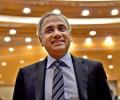
In 2017, when Infosys announced that Salil Parekh would be its next chief executive officer (CEO) and managing director (MD), very few in the industry or the analyst community doubted his ability to bring the company back to a healthy growth trajectory, improve morale within the company and, more importantly, win the promoters' trust and investor confidence. There were reasons for this confidence. He was not only the deputy CEO of the Paris-headquartered IT services major Capgemini, but also one of the only non-European faces on the executive board of the company.
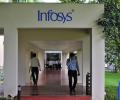
Infosys on Thursday posted an 11 per cent year-on-year rise in consolidated net profit to Rs 6,021 crore for the September quarter and also announced a share buyback programme worth Rs 9,300 crore. The IT major will also pay an interim dividend totalling Rs 6,940 crore to the shareholders. The net profit of India's second largest IT services company stood at Rs 5,421 crore in the same period a year ago.

The revenue also rose 14.2 per cent to Rs 29,305 crore (Rs 293.05 billion).

India is investing in developing indigenous capabilities in 5G and 6G telecom technologies besides focusing on manufacturing semi-conductors, Prime Minister Narendra Modi said on Thursday. In a virtual address at the Sydney Dialogue, the prime minister said the "greatest product" of technology today is data and that India has created a robust framework of data protection, privacy and security. "And, at the same time, we use data as a source of empowerment of people. India has unmatched experience in doing this in a democratic framework with strong guarantees of individual rights," he said.

The second quarter of FY22 continued to show double digit growth for the top four IT services providers, with every vertical and geography growing well, even though the total contract value (TCV) looked soft for all the players. The trend was first evident in Accenture's Q4 numbers, which saw its TCV in outsourcing deals softer. A soft TCV does not mean that growth is declining, but it does point to the trend of few and scarcer mega deals.
 © 2026 Rediff.com - Advertise with us - Disclaimer - Privacy Policy - Sitemap - Feedback - About us - Terms of use - Grievances